

Water softener installation · Rockford, IL
Water softener installation and replacement in Rockford
We install new water softeners and replace ones that have stopped keeping up, for homes on Rockford city water and on private wells. A softener removes the calcium and magnesium that leave white crust on fixtures, spots on glassware and scale inside water heaters. Call and tell us what you are seeing; we will size the system to your home and install it.
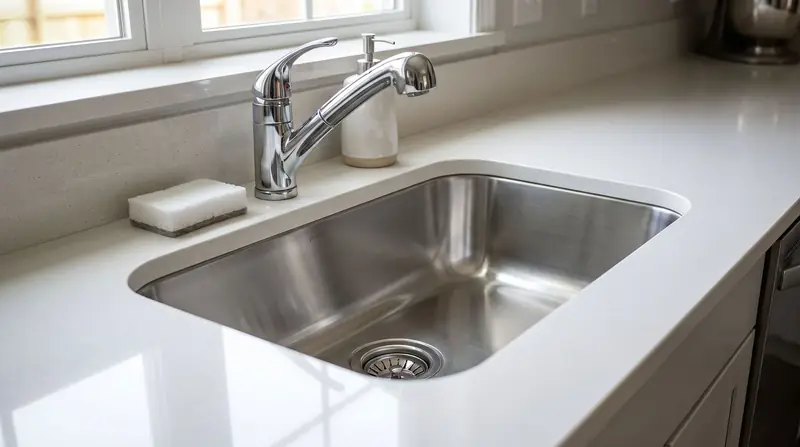
Signs a Rockford home is ready for a softener
Rockford’s water comes from city wells, and groundwater brings dissolved minerals with it. The City’s 2025 water quality report confirms the well supply but lists no hardness figure, so the clearest evidence is what the water does in your house:
- White or chalky crust around faucet bases and on showerheads.
- Glasses and silverware that come out of the dishwasher cloudy or spotted.
- Shower glass that streaks again a day after cleaning.
- Soap and shampoo that take more product to lather and longer to rinse.
- Towels that dry stiff and scratchy.
- A water heater that pops or rumbles as scale builds in the tank.
Each of these comes from the same minerals. Penn State Extension classes water above 7 grains per gallon as hard, and notes that hardness below about 7 grains will probably not cause major scaling or soap film. A test of your cold kitchen tap tells you which side of that line you are on, and gives the number a softener should be set to.


What a softener does in your home
A softener is a tank of resin beads with a brine tank beside it. As water passes through, the beads hold on to calcium and magnesium and release sodium in their place. When the beads are full, the softener rinses them with salt brine and sends the collected hardness to the drain. That cycle is called regeneration.
The benefit shows up where hard water used to leave its mark: easier cleaning, fewer spots, softer laundry and less scale building inside heaters, kettles and dishwashers. How much changes depends on your starting hardness and on the system being sized and set correctly. That is why we size to your water rather than to a standard unit.
How we size a softener for your home
A softener that is too small runs out between regenerations and lets hard water through. One that is too large, or set to a guessed hardness, wastes salt and water. On the call we work through the same factors every time:

Your hardness reading
A test strip or lab result from your cold kitchen tap. If you do not have one yet, we will explain how to get a reading before equipment is chosen.

How the household uses water
The number of people, bathrooms and laundry loads sets how many grains the softener removes each day.

Iron and other issues
Visible iron staining may call for an iron filter ahead of the softener so the resin stays clean.

City water or a well
Private wells can carry more hardness and iron than the city system, which changes the equipment.

Space and plumbing
Where the main line enters, where a drain is, and how much room there is near the water heater.

Salt and water use
Setting regeneration to actual use keeps salt and rinse water from being wasted.
Replacing a softener that has stopped keeping up
A softener does not have to fail completely before replacement is worth a look. Common signs are spots and crust coming back, salt use climbing without a change in the household, a brine tank that stays full, or a unit sized years ago for a different number of people.
When we replace a softener we size the new one to how the home uses water now, instead of copying the old unit. If iron or cloudiness has crept in since the first system went in, we will talk through a whole-house filter and softener or an iron filter instead.
What installation involves
The softener goes on the main line, usually near where water enters and ahead of the water heater, with a bypass so water can still run if the unit needs service. It needs a drain for regeneration and a standard outlet for the control valve. Once it is connected, it is programmed to your hardness and household use and run through a regeneration so you know it is working. We then show you how to add salt and what to check.

Talk about a softener
New installation or a replacement, for city water or a well.

Living with softened water
Day to day, a softener asks very little. You keep the brine tank stocked with salt, check now and then that the salt has not formed a crust (our salt bridge guide explains how), and keep the settings matched to your household.
Softened water contains a small amount of added sodium. If someone in the home is on a low-sodium diet, many households leave one cold tap, often the kitchen, unsoftened or add reverse osmosis for drinking water. We can talk through either on the call.
Softener questions
Should my water be tested before choosing a softener?
Yes. A hardness reading from your own tap is what the softener is sized and programmed to. Rockford’s 2025 water quality report gives no hardness figure to fall back on.
How often will I add salt?
It depends on hardness, household use and how the softener is set. A correctly sized unit regenerates according to actual use, which keeps salt use down.
Do you replace existing softeners?
Yes. We replace softeners that no longer keep up and size the new one to how your home uses water today.
Can a softener help with a private well?
For hardness, yes. If the well also has noticeable iron, an iron filter ahead of the softener usually works better than a softener alone.
Tired of white crust and spotted glasses?
Call Rockford Water Softener about a new softener or a replacement.
Rockford, Illinois
Find us in Rockford
Our address is 901 9th St, Rockford, IL 61104. Use the map below to find the location.
901 9th StRockford, IL 61104
Contact us
Send us a message
Tell us what you are seeing with your water and how to reach you.