Guide · softener troubleshooting
The dreaded salt bridge: why your water softener isn’t working and how to fix it
The brine tank looks full, yet spots are back on the glasses and soap will not lather. One of the most common reasons is a salt bridge: a hard crust of salt with an empty space underneath. Here is how to confirm it, clear it without damaging the tank, and stop it forming again.
Softener past fixing? We replace softeners in Rockford. Call 815-420-4075

What a salt bridge is
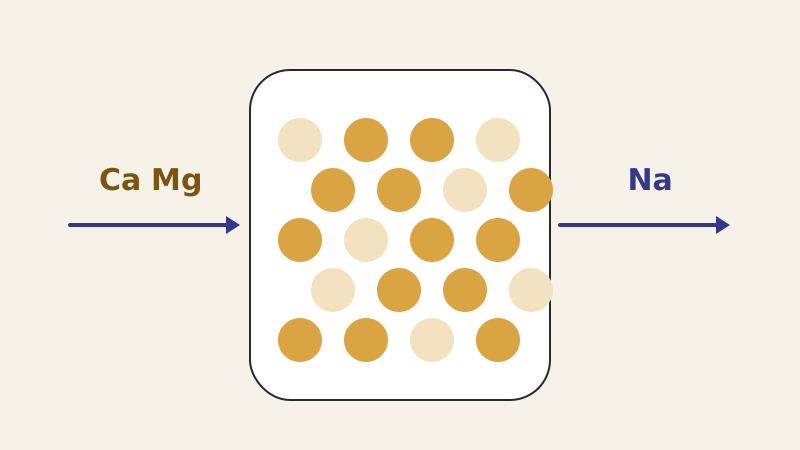
A softener makes brine by letting a little water sit in the bottom of the salt tank. Salt dissolves into that water, and during regeneration the softener draws the brine through its resin to flush out hardness.
A bridge forms when the salt above the water fuses into a solid shelf. The pellets below dissolve away, leaving a hollow gap. The water underneath no longer touches salt, so the softener draws weak brine, the resin is not fully cleaned, and hard water starts reaching your taps. From the top, the tank still looks full.
Humidity is the usual culprit. A basement or utility room that gets damp in summer, a tank filled to the brim, or salt that cakes easily all raise the odds.
Signs you may have a bridge
- Hardness symptoms come back: spots, film on shower glass, poor lather.
- The salt level has not dropped in weeks, even though the household uses water normally.
- Pressing on the salt feels solid, like a lid, rather than loose pellets.
- You can see a gap between the salt and the water when you look down the side of the tank with a flashlight.
The broom-handle check
Take a broom handle or a length of wooden dowel and push it straight down into the salt, away from the brine well (the tube that sits in one corner of the tank). If it stops on a hard surface well above the bottom, then breaks through into empty space, you have found a bridge. If it slides through loose salt to the bottom, the salt is fine and the cause is elsewhere.
How to break up a salt bridge safely
- Lift off the lid and look. Check where the brine well sits so you can keep away from it.
- Tap, do not stab. Use the broom handle to tap the crust gently in several spots until it cracks. Work around the edges where it often bonds to the tank wall.
- Break it into chunks. Keep tapping until the pieces drop into the water. Large chunks can be lifted out and broken up separately.
- Remove mushy salt if needed. If the bottom has turned into a thick sludge, scoop it out. That sludge can block the brine draw just as badly.
- Top up, but not to the brim. Add fresh salt so the tank is about half to two-thirds full.
- Return to service and regenerate. Take the softener out of bypass and start a manual regeneration as the manual describes, so the resin gets a full brine rinse.
Hardness should start to ease after the first full regeneration, and it may take a second cycle to catch up. If the water is still hard a couple of days later, the problem is probably not salt.
When it is not a bridge
If the salt is loose and the softener still lets hard water through, look at these:
- Settings: the hardness setting may be lower than your water. Check it against a fresh tap reading.
- Household change: more people or more laundry than when the unit was set up.
- Iron: iron can coat the resin. An iron filter ahead of the softener protects it.
- Age: resin and control valves wear. A softener that keeps falling behind may be due for replacement.
Keeping bridges from coming back
- Fill less, more often. Keeping the tank half to two-thirds full leaves less salt sitting in humid air.
- Break the surface monthly. A quick push with the broom handle when you check the level catches a crust early.
- Choose clean pellet salt. Rock salt and some blends leave more residue and sludge.
- Mind the room. If the utility area runs damp in summer, a dehumidifier helps the salt and everything else down there.
Rockford’s water is groundwater, and the City’s 2025 report publishes no hardness figure, so set the softener from your own tap reading rather than a guess. A softener set close to your real hardness regenerates when it should, which keeps salt use steady and makes a stalled level easier to spot.
When to call
If bridges keep returning, or the softener is still not keeping up after a clean regeneration, call us. We replace softeners that no longer suit the home and size the new one to your water and household today.
Salt bridge questions
Can I use hot water to dissolve a bridge?
Some owners pour warm water over the crust to soften it. Avoid boiling water on a plastic tank, and check your manual first.
How often should I check the salt?
Once a month is a good habit for most homes; more often in a humid summer.