Guide · how softeners work
How does a water softener work? The ion exchange process, explained
A softener does one thing: it swaps the calcium and magnesium in your water for sodium, using a tank of resin beads, and then rinses itself clean with brine. Knowing how that swap works makes it much easier to judge whether a softener fits your Rockford home, how it should be set, and which water problems it will not touch.
We install and replace softeners in Rockford. Call 815-420-4075
Start with the water: why Rockford homes deal with hardness
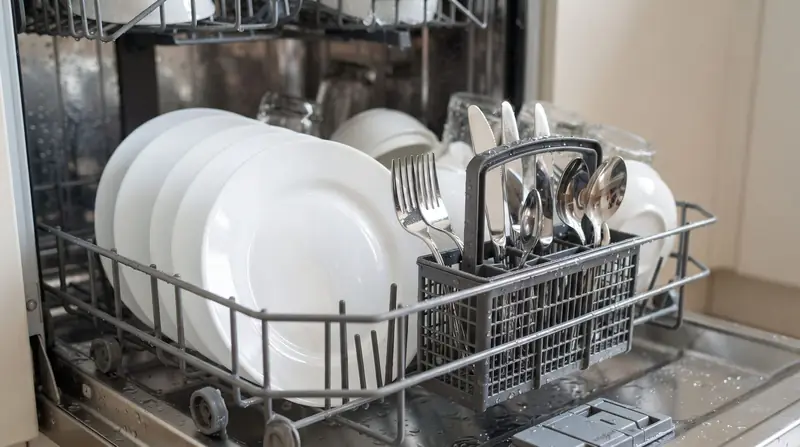
Rockford pumps its water from wells; the City calls groundwater the sole source of its supply. As groundwater sits in and moves through rock, it dissolves minerals. Calcium and magnesium are the two that make water “hard.” The City disinfects the water before it enters the mains, but disinfection is about safety, not minerals, so the hardness arrives at your tap.
The City’s 2025 water quality report does not include a hardness row, and we do not repeat older, undated figures. What a homeowner can rely on is a reading from their own cold tap. That number, in grains per gallon (gpg) or milligrams per liter, is what the rest of this guide plugs into. Penn State Extension uses a simple scale: under 1 gpg is soft, 3.5 to 7 is moderately hard, 7 to 10.5 is hard, and above 10.5 is very hard. One grain per gallon equals about 17.1 mg/L.
The swap inside the resin tank

The main tank holds thousands of tiny plastic resin beads. Each bead carries negative charges that hold positive ions loosely. When the softener is fresh, those sites are occupied by sodium.
Calcium and magnesium ions each carry two positive charges, sodium carries one. The resin holds the double-charged ions more strongly, so as hard water flows past, the beads grab calcium and magnesium and let sodium go. The water leaving the tank has had its hardness exchanged for a small amount of sodium.
Nothing is filtered out in the usual sense. The water is not strained; its dissolved minerals are traded. That is why a softener does not change chlorine taste, cloudiness from sediment or most odors, and why it is not a substitute for a filter.
As more water passes, more sites fill with hardness. Eventually the resin has few sodium ions left to trade, and hard water starts slipping through. That is the signal for regeneration.
Regeneration: how the softener resets itself
The second tank, the brine tank, holds salt and a little water. During regeneration the control valve draws that strong salt solution through the resin. There is so much sodium in the brine that it pushes the calcium and magnesium off the beads, even though the beads prefer them. The hardness and spent brine are flushed to the drain, the resin is rinsed, and the softener goes back to service.
Most modern units regenerate based on how much water has been used rather than on a fixed calendar. The control valve counts gallons and starts a cycle when the resin is close to full. That is where your tap reading matters: the valve needs your hardness number to know how many gallons it can soften before the resin runs out.
Why the settings matter
- Set too low and the softener regenerates too late; hard water reaches the house for part of each cycle.
- Set too high and it regenerates early, using more salt and rinse water than it needs.
- Iron in the water can coat the resin. If staining is visible, an iron filter ahead of the softener protects it.

Where a softener stops and other equipment starts
Because ion exchange only trades positive mineral ions, it leaves a lot alone. Here is how the common Rockford complaints sort out:
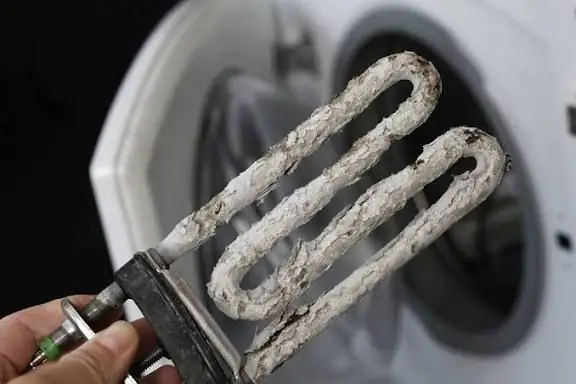
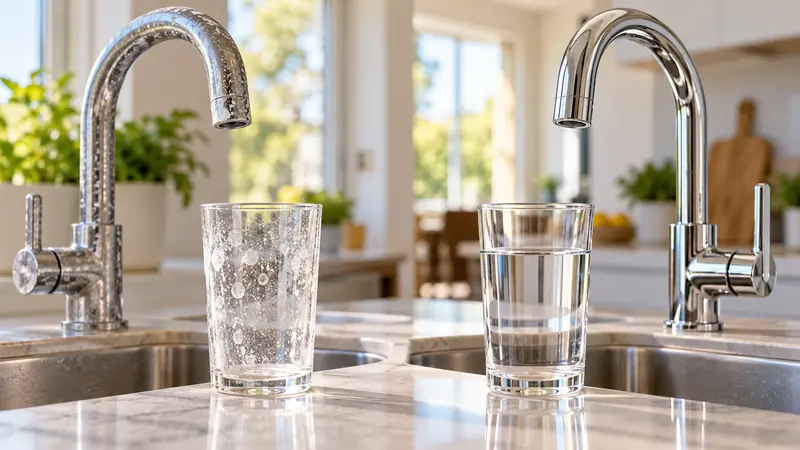
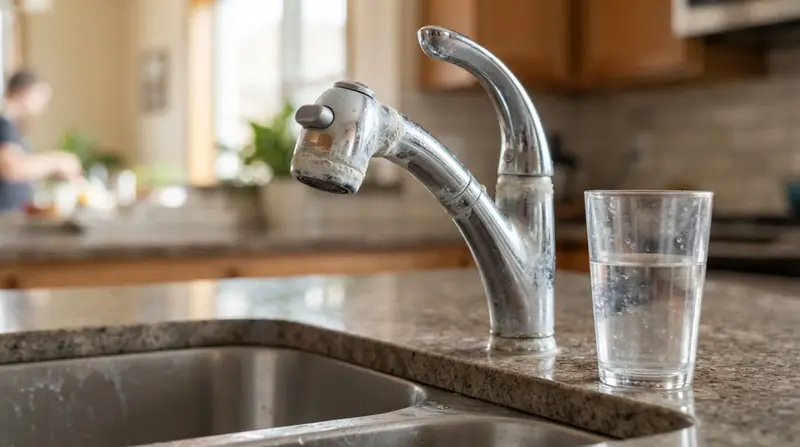
- White crust, spots, soap film, heater scale: softener.
- Grit, cloudiness, chlorine taste or odor: a whole-house filter and softener.
- Orange stains and metallic taste: an iron filter ahead of the softener, especially on a well. The City’s 2025 report shows iron of 0 to 0.14 ppm on the city system, so heavy staining usually points to a well or old pipe.
- Better-tasting drinking water at one tap: reverse osmosis under the kitchen sink.
Is a softener worth it for your home?
If your tap reads hard or very hard and you are fighting scale and spots, a correctly sized softener usually means easier cleaning, softer laundry and less buildup inside water-heating appliances. If your reading is low, a softener may not be worth the salt. The tap test settles it.
When it is worth it, we install and replace softeners for Rockford homes, sized to your reading and household. Call and tell us what you are seeing.
Sources: City of Rockford 2025 Consumer Confidence Report; Penn State Extension, “Water Softening” (updated September 2025); Minnesota Department of Health, “Home Water Softening” (updated October 2022).
Common questions
Does softened water taste salty?
Usually not. The added sodium is small and depends on how hard the water was to start with. Some households keep one cold tap unsoftened or add reverse osmosis for drinking.
How long does regeneration take?
Typically a couple of hours, often set for the middle of the night when nobody is using water.
Do the resin beads wear out?
Slowly, over years. Chlorine and iron can shorten their life, which is one reason for pre-treatment where it fits.