Why Rockford’s Hard Water Can Cost Homeowners More Over Time
Learn How Rockford’s Groundwater Affects Plumbing, Appliances, Cleaning, and Everyday Water Use
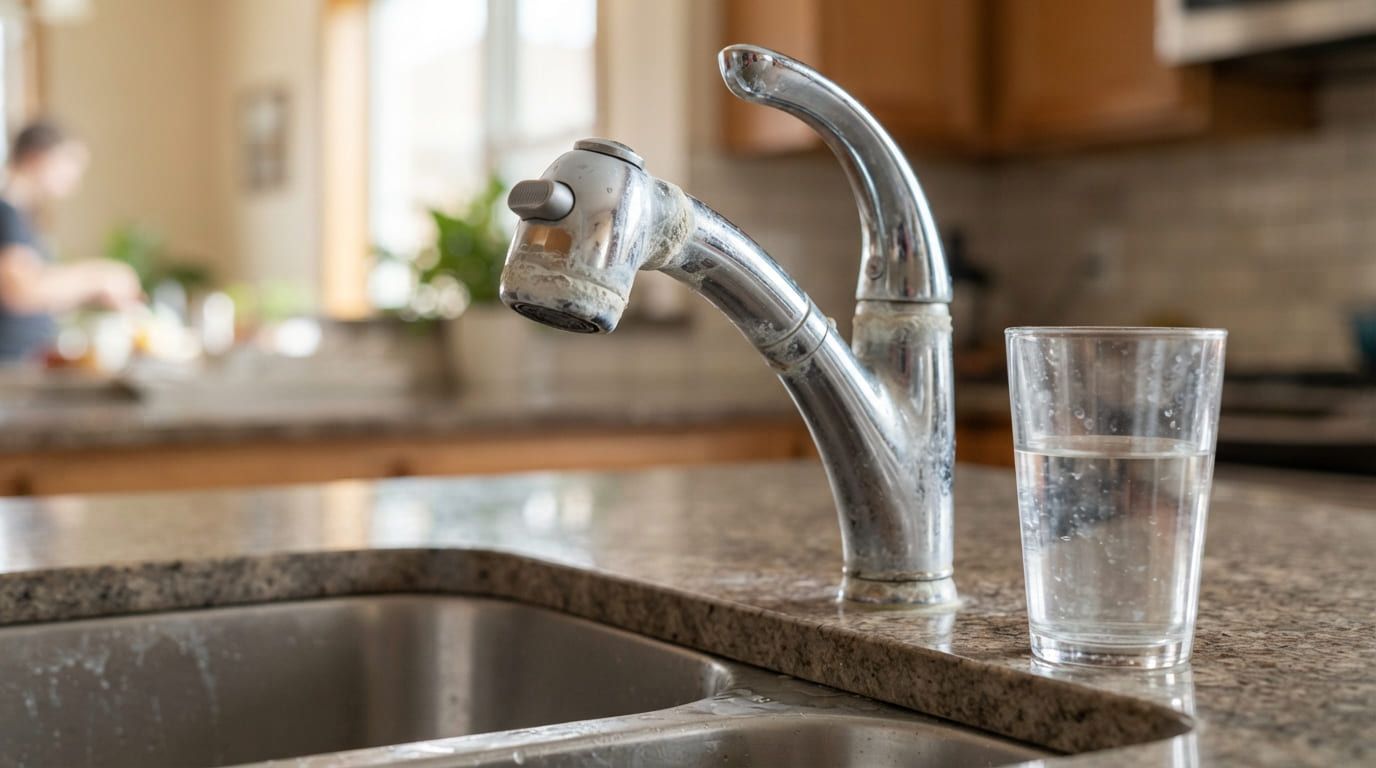
Hard water problems are easy to dismiss when they first appear. A few spots on a glass or a little white buildup around a faucet may not seem serious. Over time, however, those same minerals can collect inside water heaters, dishwashers, washing machines, plumbing fixtures, and water lines.
This is especially relevant for homeowners in Rockford. The city receives its drinking water from underground aquifers, and Rockford’s water is naturally hard. According to information published by the City of Rockford, local hardness levels can range from approximately 9 to 21 grains per gallon. Water above 10.5 grains per gallon is generally classified as very hard. City of Rockford Water Information
Understanding what is in the local water can help you protect your home and choose a treatment system based on facts rather than guesswork.
Where Does Rockford’s Water Come From?
Unlike communities that receive surface water from a lake or river, Rockford uses groundwater drawn from an aquifer beneath the city. The water is pumped from wells, treated, stored, and distributed to homes and businesses.
As groundwater moves through underground soil and rock, it naturally picks up dissolved minerals. Calcium and magnesium are the primary minerals responsible for water hardness. Rockford’s water source is naturally rich in these minerals, which explains why hard water symptoms are so common in local homes.
The mineral level can vary depending on the well supplying a particular part of the distribution system. Your home’s plumbing, water heater, fixtures, and treatment equipment can also influence what you experience at the faucet.
What Does 9 to 21 Grains of Hardness Mean?
Water hardness is commonly measured in grains per gallon. The higher the number, the more calcium and magnesium are present in the water.
Rockford’s reported range means that water in many parts of the city falls into the hard or very hard category. At these levels, mineral deposits can form quickly, especially wherever water is heated or allowed to evaporate.
Hardness is generally considered an aesthetic and household maintenance issue rather than a drinking water health concern. However, it can affect nearly every appliance and fixture that uses water.
Signs of Hard Water in a Rockford Home
You do not need laboratory equipment to notice many of the symptoms of hard water. The evidence often appears in the kitchen, bathroom, and laundry room.
Common signs include:
- White or chalky buildup around faucets
- Spots on glasses, dishes, and silverware
- Cloudy glass shower doors
- Mineral crust around showerheads
- Soap scum on bathtubs and tile
- Laundry that feels stiff after washing
- Dry feeling skin after bathing
- Hair that feels dull or coated
- Reduced water flow from fixtures
- Frequent cleaning of sinks and bathrooms
If several of these problems are present, testing the water can confirm the hardness level and help determine the correct treatment capacity.
The Hidden Cost of Mineral Buildup
Visible mineral deposits are frustrating, but the scale forming inside your plumbing can be more expensive.
When hard water is heated, calcium and magnesium can separate from the water and attach to internal surfaces. This makes the water heater one of the most vulnerable appliances in the home. Scale may collect at the bottom of a tank or around heating components, forcing the equipment to work harder.
Mineral buildup may also affect:
- Dishwashers
- Washing machines
- Coffee makers
- Humidifiers
- Ice makers
- Faucet cartridges
- Shower valves
- Plumbing lines
Even a thin layer of scale can interfere with heat transfer and water flow. As the buildup becomes heavier, homeowners may experience declining performance, higher maintenance needs, and a shorter useful life for certain appliances.
Why Hard Water Makes Cleaning More Difficult
Hardness minerals react with soap and reduce its ability to lather. Instead of rinsing away cleanly, soap can combine with calcium and magnesium to create a sticky residue.
This reaction is what causes much of the soap scum found on shower walls, bathtubs, sinks, and fixtures. It can also leave clothing feeling less comfortable and make shampoo harder to rinse from your hair.
Many homeowners compensate by using more detergent, shampoo, dish soap, and cleaning products. While this may improve the immediate result, it does not solve the water problem.
Softened water allows soaps and detergents to work more effectively. You may be able to use less product while getting cleaner dishes, softer laundry, and fixtures that require less scrubbing.
How a Water Softener Works
A water softener removes calcium and magnesium through ion exchange. Water enters a tank filled with resin beads that attract and capture hardness minerals. The treated water then flows into the home’s plumbing system.
Periodically, the softener completes a regeneration cycle. A salt solution cleans the collected minerals from the resin so it can continue treating the water.
A properly sized and programmed system should account for:
- The home’s measured water hardness
- The number of people in the household
- Average daily water use
- Plumbing flow rate
- Number of bathrooms
- Additional minerals that may affect treatment
Proper sizing is especially important in an area where the hardness level may vary. A system programmed for 9 grains per gallon will perform differently from one that must treat water at 21 grains per gallon.
Benefits of Softened Water
A water softener treats the water before hardness minerals have a chance to travel throughout your home. This can produce noticeable improvements in daily cleaning and long term appliance protection.
Potential benefits include:
- Fewer water spots on dishes and glassware
- Less scale around faucets and showerheads
- Reduced soap scum in showers and bathtubs
- Softer feeling laundry
- Better lather from soaps and shampoos
- Easier kitchen and bathroom cleaning
- Improved protection for the water heater
- Less mineral buildup inside plumbing fixtures
Existing scale may not disappear immediately, but softened water can help prevent additional deposits from forming.
Is a Water Softener the Same as a Water Filter?
Water softening and water filtration serve different purposes.
A water softener targets hardness minerals, primarily calcium and magnesium. A filtration system is designed to address other water concerns, which may include sediment, chlorine taste, odors, or specific substances identified through testing.
Rockford treats its municipal water before distributing it to customers. However, some homeowners still choose additional treatment based on personal preferences, the age of their plumbing, or the water quality they want at the tap.
Treatment options may include:
- A water softener for hardness minerals
- A whole house filter for water throughout the home
- An iron filter when testing identifies an iron problem
- A reverse osmosis system for drinking and cooking water
- A combination system for multiple concerns
No single system solves every water problem. Testing helps match the equipment to the condition it is actually intended to treat.
Why Water Testing Is Important
Rockford’s published hardness range provides useful background, but it does not replace testing at your home. Water conditions can vary within the city, and the amount of hardness determines how a softener should be sized and programmed.
A professional water evaluation can help answer several important questions:
- How hard is the water at your address?
- Is iron present?
- Is the existing softener working properly?
- What size system does the household need?
- Would additional filtration be helpful?
- How frequently should the system regenerate?
Testing can prevent you from purchasing equipment that is undersized, inefficient, or intended for the wrong type of water problem.
Maintaining a Water Softener in Rockford
A water softener requires basic maintenance to continue working efficiently. Homeowners should check the brine tank regularly and add the correct salt before it becomes empty.
The system should also be inspected for salt bridges. A salt bridge is a hardened layer that forms inside the brine tank, leaving an empty space underneath. The tank may appear full even though the system cannot produce the brine needed for regeneration.
If water spots suddenly return, soap stops lathering, or the water begins to feel hard again, the softener may need salt, cleaning, a programming adjustment, or professional service.
Get a Water Softener Sized for Your Rockford Home
Living with hard water can mean more cleaning, more detergent, and more mineral buildup inside the equipment your household depends on. The right water softener can make everyday water use easier while helping protect your plumbing and appliances.
Rockford Water Softener provides professional water testing, water softener installation, whole house filtration, and iron filtration solutions for homeowners in Rockford, Illinois.
Contact Rockford Water Softener to have your water evaluated and receive a treatment recommendation based on your home, water conditions, and household needs.